Python – Machine Learning Open Source Libraries – In this article we are going to talk
about Machine Learning Open Source Libraries, so first of all we need Python programming language for Machine Learning but there are some other alternatives programming language like R and Java that are used for Machine Learning so now we are going to talk about Libraries
Check my article on Introduction To Python Machine Learning
1: Numpy
NumPy is the fundamental package for array computing with Python.
Numpy provides
- A powerful N-dimensional array object
- Sophisticated (broadcasting) functions
- Tools for integrating C/C++ and Fortran code
- Useful linear algebra, Fourier transform, and random number capabilities
- And much more
Besides its obvious scientific uses, NumPy can also be used as an efficient multi-dimensional container of generic data. Arbitrary data-types can be defined. This allows NumPy to seamlessly and speedily integrate with a wide variety of databases.
All NumPy wheels distributed on PyPI are BSD licensed.
2: Scipy
SciPy (pronounced “Sigh Pie”) is open-source software for mathematics, science, and engineering. The SciPy library depends on NumPy, which provides convenient and fast N-dimensional array manipulation. The SciPy library is built to work with NumPy arrays, and provides many user-friendly and efficient numerical routines such as routines for numerical integration and optimization. Together, they run on all popular operating systems, are quick to install, and are free of charge. NumPy and SciPy are easy to use, but powerful enough to be depended upon by some of the world’s leading scientists and engineers. If you need to manipulate numbers on a computer and display or publish the results, give SciPy a try!
for installation you can check Pypi.org
3: Matplotlib
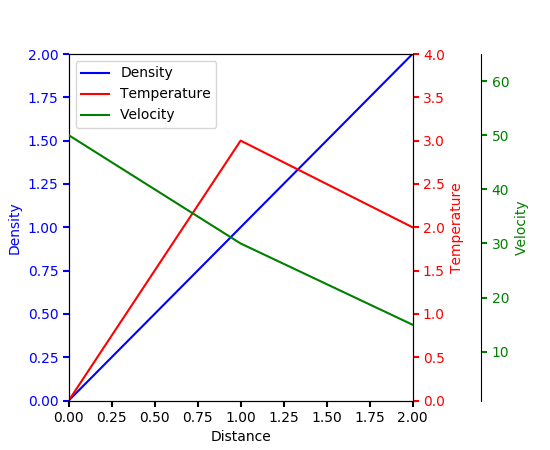
Matplotlib is a Python 2D plotting library which produces publication quality figures in a variety of hardcopy formats and interactive environments across platforms. Matplotlib can be used in Python scripts, the Python and IPython shells, the Jupyter notebook, web application servers, and four graphical user interface toolkits.
Matplotlib tries to make easy things easy and hard things possible. You can generate plots, histograms, power spectra, bar charts, errorcharts, scatterplots, etc., with just a few lines of code. For examples, see the sample plots and thumbnail gallery.
For simple plotting the pyplot module provides a MATLAB-like interface, particularly when combined with IPython. For the power user, you have full control of line styles, font properties, axes properties, etc, via an object oriented interface or via a set of functions familiar to MATLAB users. for installation check the Instructions, also you can check the Pypi.org for installation
4: Scikit-learn
Scikit-learn is one the most popular ML libraries. It supports many supervised and unsupervised learning algorithms. Examples include linear and logistic regressions, decision trees, clustering, k-means and so on.It builds on two basic libraries of Python, NumPy and SciPy.
For installation process you can see the Documentation of Scikit-learn or Pypi.org
5: Pandas
Pandas is an open source, BSD-licensed library providing high-performance, easy-to-use data structures and data analysis tools for the Python programming language. pandas is fast, flexible, and expressive data structures designed to make working with structured (tabular, multidimensional, potentially heterogeneous) and time series data both easy and intuitive. It aims to be the fundamental high-level building block for doing practical, real world data analysis in Python. Additionally, it has the broader goal of becoming the most powerful and flexible open source data analysis / manipulation tool available in any language. It is already well on its way toward this goal. for installation check Pypi.org
6: Tensorflow (Deep Learning Library)
TensorFlow is an open source software library for high performance numerical computation. Its flexible architecture allows easy deployment of computation across a variety of platforms (CPUs, GPUs, TPUs), and from desktops to clusters of servers to mobile and edge devices.
Originally developed by researchers and engineers from the Google Brain team within Google’s AI organization, it comes with strong support for machine learning and deep learning and the flexible numerical computation core is used across many other scientific domains.
7: Theano (Deep Learning Library) – Dead Library
Theano was a Python library that allows you to define, optimize, and evaluate mathematical expressions involving multi-dimensional arrays efficiently, it is like Numpy, but unfortunately it is dead now. Theano features :
- tight integration with NumPy – Use numpy.ndarray in Theano-compiled functions.
- transparent use of a GPU – Perform data-intensive computations much faster than on a CPU.
- efficient symbolic differentiation – Theano does your derivatives for functions with one or many inputs.
- speed and stability optimizations – Get the right answer for
log(1+x)even whenxis really tiny. - dynamic C code generation – Evaluate expressions faster.
- extensive unit-testing and self-verification – Detect and diagnose many types of errors.
8: Keras (Python Deep Learning Library)
Keras is a high-level neural networks API, written in Python and capable of running on top of TensorFlow, CNTK, or Theano. It was developed with a focus on enabling fast experimentation. Being able to go from idea to result with the least possible delay is key to doing good research.
Use Keras if you need a deep learning library that:
- Allows for easy and fast prototyping (through user friendliness, modularity, and extensibility).
- Supports both convolutional networks and recurrent networks, as well as combinations of the two.
- Runs seamlessly on CPU and GPU.
For more information and installation check Keras Documentation

9: Seaborn
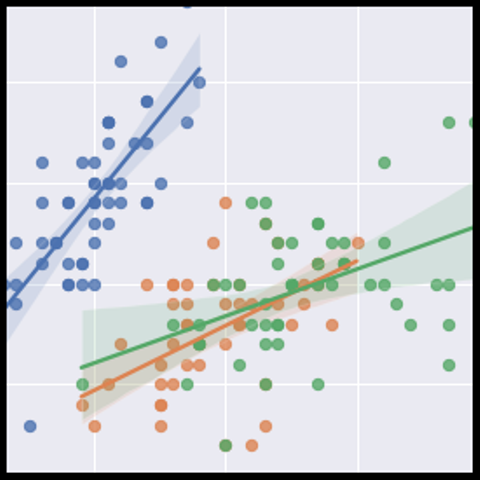
Seaborn is a Python data visualization library based on matplotlib. It provides a high-level interface for drawing attractive and informative statistical graphics.
For a brief introduction to the ideas behind the library, you can read the introductory notes. Visit the installation page to see how you can download the package. You can browse theexample gallery to see what you can do with seaborn, and then check out the tutorial and API reference to find out how.